How to Make a Blending Stump (DIY Drawing Tool)

What is a Blending Stump? A blending stump is simply a tightly rolled piece of paper with a pointy tip, used to blend mediums such as graphite, charcoal or pastel.
Artists use it to:
- Achieve smoother shading
- Blend harsh pencil strokes
- Soften transitions
- And when it becomes saturated, they can use it to shade and blend all in one go. How cool is that!

At the art store, these blending tools can feel expensive for what they are, so in this tutorial, I’m going to show you how to make your own blending stump at home using materials I bet you already have lying around your house! Homemade blending stumps work surprisingly well and can even be customized to your specific needs. I’ll show you how later on in the tutorial!
Materials to Make a DIY Blending Stump
To make a DIY blending stump, gather the following:
- Different types of scrap paper
- Scissors
- Tape or glue
- Medium-grit sandpaper (around 100 grit or finer) or something similar, like a nail filer or even a smooth brick from the exterior of your house. Yes, I’m serious.
- Optional: box cutter or craft knife (Note to young artists: Please ask a guardian for help before using sharp tools)
Step 1: Choose the Right Paper for Your Blending Stump

To create an effective blending tool, the softness of your paper matters. Try ripping it and looking at the edge. The more frayed it is, the softer the paper, and the better it will blend graphite.
I recommend using different types of paper to see which one works best.
Step 2: Cut a Rectangle of Paper

Start by cutting a rectangle of paper. The exact dimensions are not important. In case you want to follow what I did, my dimensions are roughly 13cm x 7cm. The size of your rectangle simply affects the length and thickness of your blending stump. Later in this tutorial, I will show you how to customize your rectangle size for length, thickness and comfortability.
Step 3: Trim One Corner

We’re going to roll this rectangle up tightly, but it’s difficult to do so with such a long edge. To make it easier:
- Cut off the top corner of the rectangle (just on one side).
- Leave about 2 thumb-widths because we’ll be rolling with our thumbs.
If you’re able to roll the paper tightly without trimming the corner, that’s recommended!
Step 4: Curl the Paper


Before rolling the paper stump, it helps to first pre-curl the paper using a pair of scissors. Place the paper between your index finger and a closed pair of scissors and gently pull the paper through several times, like how you would curl a ribbon.
Step 5: Roll the Paper Tightly

Now roll the paper as tightly as you can, starting from the trimmed side. Use your thumb and index finger to roll the very edge back and forth until it becomes soft and can be rolled densely. Roll straight across, using both thumbs and index fingers. If you’re having difficulty with this step, it helps to wet your fingers slightly or even the paper itself, but be careful not to overdo it with the water, otherwise, your paper can start breaking down.

This step is extremely important. The tightness of the very first roll determines how sharp the tip of your blending stump will be. A sharp tip is needed for doing detailed work on your drawing, so try to make it as dense as possible.
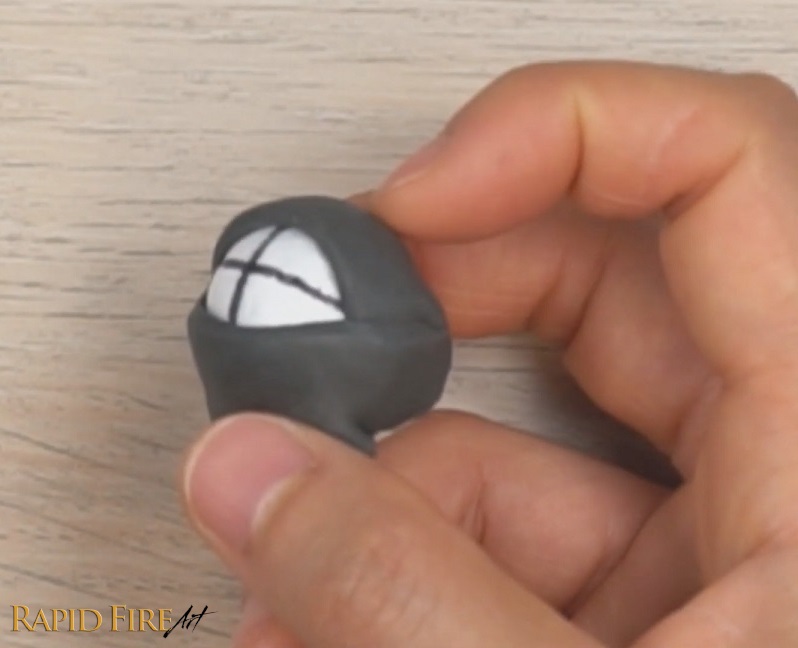
You will notice that the trimmed end of your paper stump will appear hollow. This is normal!
Why a Pointed Tip Matters

A sharp, firm tip allows you to:
- Blend tiny details with precision
- Smooth out your shading in tight spaces
- Have better control over what you’re blending/drawing
Sometimes you’ll find a paper that’s very soft and spreads graphite beautifully when using the side. However, that same softness can make the tip too weak for precision work. Blending stumps made from this type of paper are better suited for smoothing large areas, while detailed blending may end up looking blurry or muddy. In this case, it can help to keep two blending stumps in your toolkit: one for broad blending and another, made from a firmer paper, for detail work.

Step 6: Tape the End Closed

Once the paper is rolled up tightly all the way across, hold it firmly with one hand and tape it closed. Avoid taping too close to the ends. If you want a clean seal from end to end, you can use a little glue along the edge. Be prepared to hold it closed for a few short minutes before letting go, to make sure it doesn’t unravel.
Step 7: Sharpen and Sand Your Paper Blending Stump
First, make sure you are sharpening the correct end – the solid/dense end, not the hollow one (since we trimmed the paper earlier, one end of the stump will be hollow).
Here are two ways to sharpen your blending stump:

For Young Artists:
- Try sharpening your stump using a pencil sharpener. If that fails, use sandpaper to sharpen your blending stump to a point, while holding it at an angle (This takes a few minutes, but is much safer than using a razor or knife).
- If you decide to use a sharp object, please ask a guardian for help :)

For Adults:
- Use a box cutter or craft knife held at an angle to sharpen the solid end until it forms a point.
- It won’t look perfectly sharp yet, so refine it using sandpaper. This process also makes the paper slightly fuzzy, which helps it grab and spread graphite better. Avoid coarse sandpaper since it can tear up the paper and make the surface uneven.
Tip: If you don’t have sandpaper, you can try alternatives such as a nail filer (emery board), pumice stone, or even a clean and smooth brick. (Thanks to my Youtube viewers for suggesting alternative sharpening methods!).
Testing your Homemade DIY Blending Stump

When you’re done, test your stump by simply blending some scribbled graphite or charcoal using the side and the tip. A good blending stump should:
- Spread graphite smoothly without any streaks
- Be able to draw thin lines when the tip is saturated with graphite residue
- Maintain a sharp tip for precision work
Experiment With Different Papers
Try making blending stumps using different paper types. It doesn’t strictly need to be art paper. You can use a paper bag or non-colored newspaper. Each paper will behave slightly differently.
For example, very soft paper may blend graphite extremely well, but as mentioned earlier, the tip may not be firm enough for precise work. In that case, the stump will be better suited for blending broad areas of a drawing, such as large areas of skin, rather than tiny details like the iris or tear duct.
Test multiple types of paper to find the right balance between softness and stiffness for your personal drawing needs.
Alternatives: As one of my YouTube viewers pointed out, paper lollipop sticks can also work as miniature blending stumps. Because they’re machine-rolled very tightly, their dense structure allows you to sharpen them to a fine tip that’s great for blending small details.
How to Customize Your Blending Stump
One great advantage to making your own blending stump, besides being free, is that you can customize the size and shape any way you want to fit your needs.
How to Make a Longer Blending Stump

If you want a blending stump that is ergonomic and feels more like holding a pencil, cut a longer rectangle of paper. A long one will be easier and more comfortable to hold.
How to Make a Thicker Blending Stump

For blending large areas more quickly, cut a wider rectangle. This gives you a chunkier stump that can cover more surface area with each swipe. This is great for blending things like the forehead, cheeks, clothing or large backgrounds. It’s also more comfortable to hold if you have large hands.
If you run out of paper while rolling, simply tape another piece of paper onto the end and continue rolling.
If you want a long and thick blending stump, increase both the length and width of your paper.
How to Clean a Dirty Blending Stump
Once you’ve worked on a few drawings, the stump may become fully saturated with graphite. To clean a blending stump, you can:
- Sand it down similarly to how you did when creating it. This also sharpens it again.
- Alternatively, you can use an eraser to erase the graphite off. This may not work too well for softer blending stumps where the graphite is lodged deep within the fibers. But it’s great if you’re in a rush.
Final Thoughts

Making your own paper blending stump is not only fun, but also makes use of scrap paper that may have ended up being thrown away. It’s also a great way to test different blending textures to find one that suits your drawing style or to fit different drawing projects you may have. Try making a few and compare how they perform against each other. I hope this was a fun little DIY project for you! I know I had a lot of fun rolling and testing different papers to find the winner!
Click here to learn how to USE a blending stump!
If you have any questions or suggestions, please leave a comment below.
Thank you!
Darlene 😊

Darlene created RFA In 2013 with the goal of sharing simple yet detailed drawing tutorials with other artists on the world wide web. She is a self taught pencil portrait artist and Youtuber.
How to Make a Blending Stump (DIY Drawing Tool) Read More »